Flood damage cleanup
Clear flood water, mud, and debris before contamination spreads
Flood damage cleanup handles basement flooding, storm-driven water intrusion, and sewer backups across NY, NJ, and CT — including Brooklyn, Jersey City, and surrounding communities. Extraction, mud removal, and structural drying in one coordinated response.
Restore Rite works with insurers








Property owners in NY and NJ choose their own restoration contractor — not only the insurer's preferred vendor.
When flood water enters
Why is flood water harder to clean than a pipe leak?
Ground-level flood water and sewer backups are classified as category 2 or 3 — carrying bacteria, sediment, and contaminants that clean supply-line water does not. Porous materials that absorb flood water typically cannot be dried in place.
Restore Rite handles basement flooding, storm-driven intrusion, and sewer backups across NY, NJ, and CT — pump-out, mud removal, contaminated material disposal, and structural drying in one coordinated response. Same-day dispatch starts at (877) 537-3786.
"Flood water does not stop at the visible wet line — neither should cleanup."
What's included
What does flood damage cleanup include?
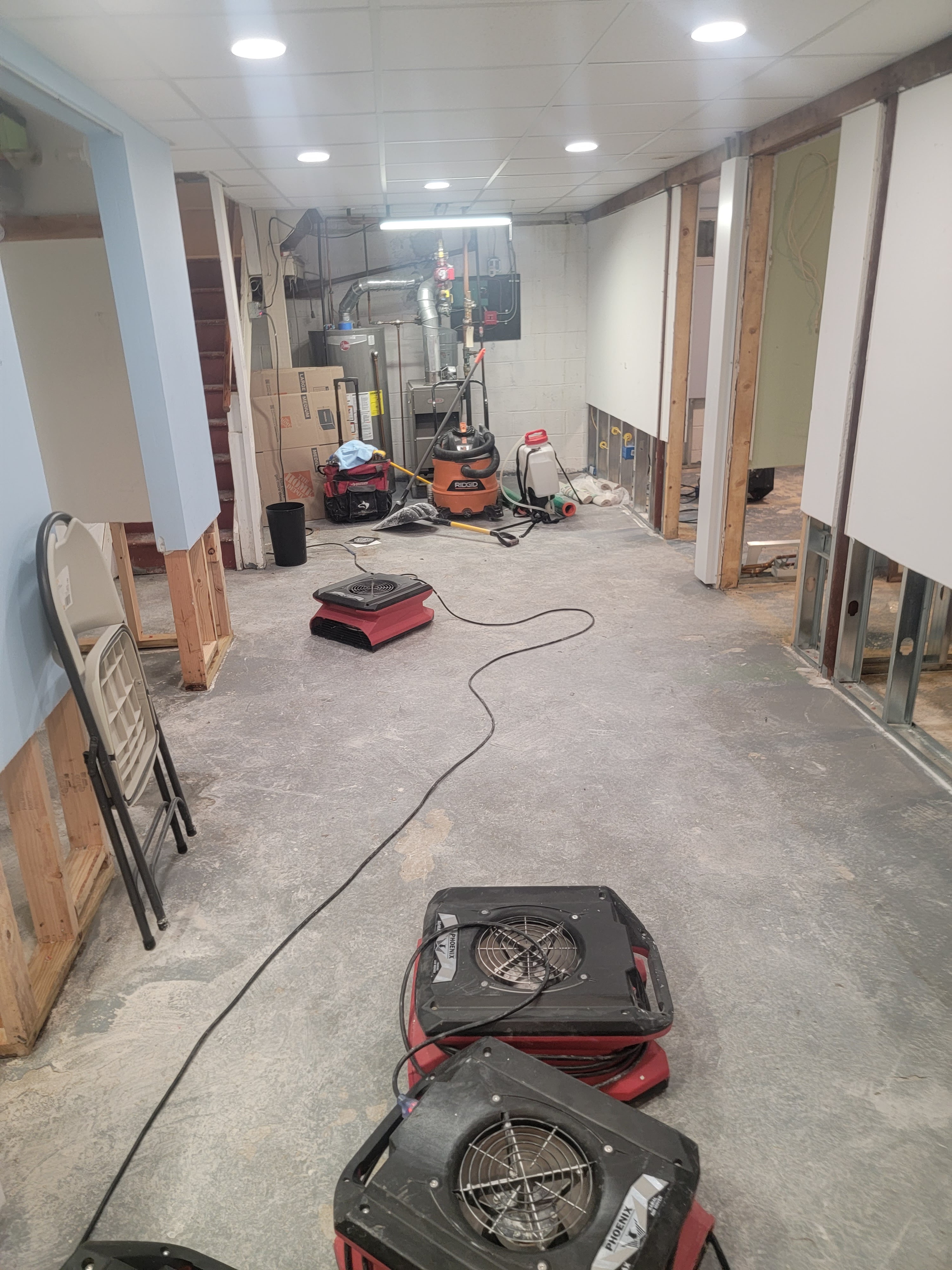
Deep water pump-out
Submersible pumps remove standing water from basements, crawlspaces, and ground-floor flooding.
Mud, silt, and debris removal
Floors and stairwells cleared of sediment before contaminated materials are stripped and disposed of.
Contamination protocols
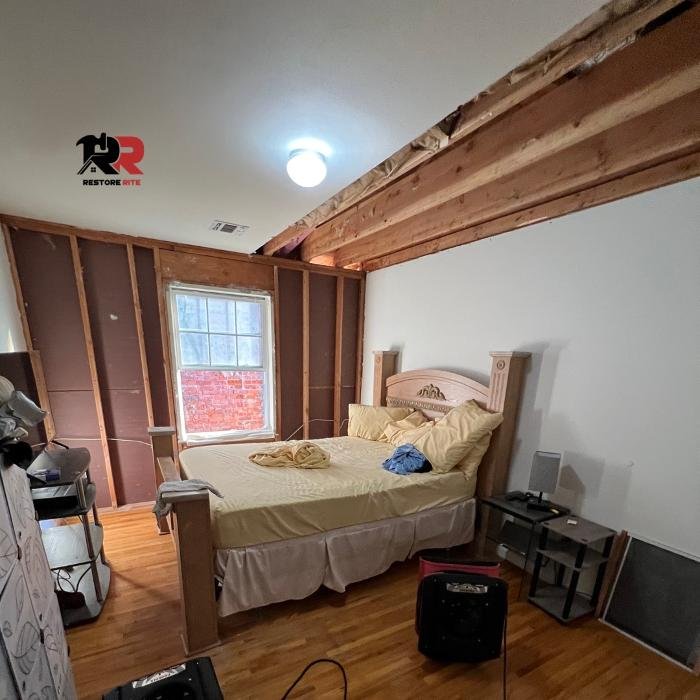
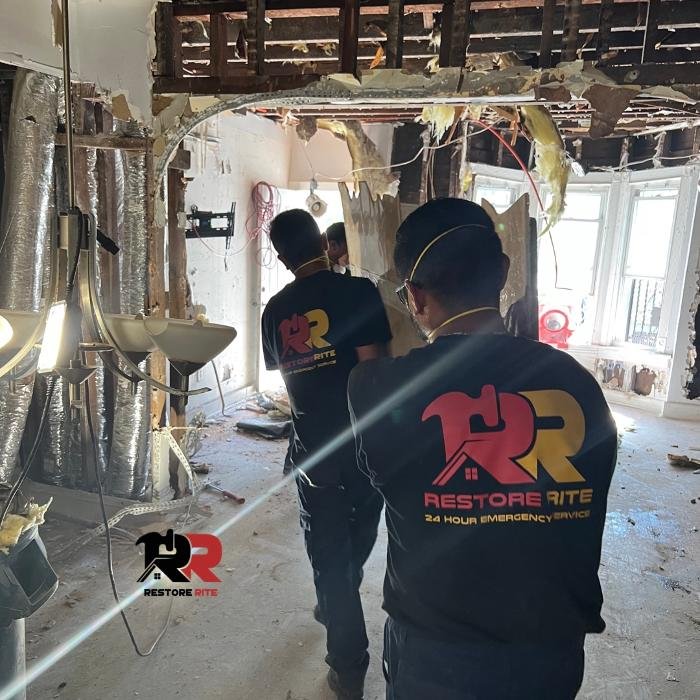
Category 2 and 3 losses follow IICRC containment standards — porous materials bagged and removed, not dried in place.
Structural drying and documentation
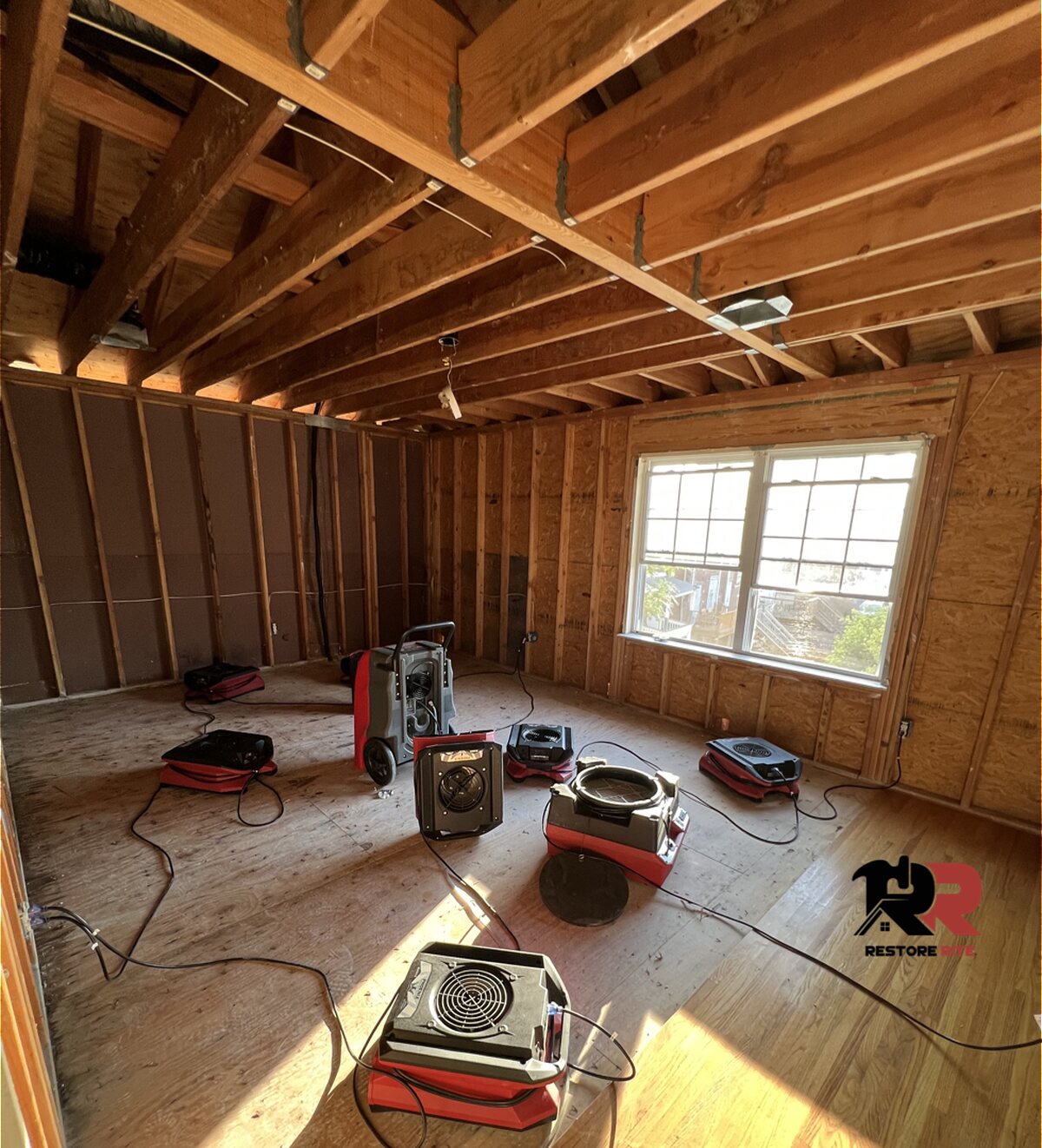
Commercial dehumidifiers and air movers run until moisture targets are met — with photo logs for adjusters.
Flood losses often overlap with storm damage restoration when wind or roof damage allowed water in — coordinated under full water damage restoration.
Common questions
Questions about flood damage cleanup in the Tri-State area
What is included in flood damage cleanup?
Flood damage cleanup includes water extraction, mud and debris removal, disposal of contaminated porous materials, HEPA cleaning of salvageable surfaces, antimicrobial treatment, and structural drying. Restore Rite handles category 2 and 3 flood water per IICRC guidelines.
How is flood cleanup different from a pipe leak?
Flood water often carries sediment, bacteria, and contaminants from ground level or sewer backup — classified as category 2 or 3. More porous materials must be removed and surfaces require deeper cleaning than a clean supply line break.
Does Restore Rite handle basement flooding after storms?
Yes. Basement flooding from heavy rain, storm surge, or failed sump pumps is a core service across the Tri-State area. Crews extract standing water, remove mud and debris, and begin structural drying the same day in most locations.
How long does flood damage cleanup and drying take?
Cleanup and initial extraction typically complete in one day for a single basement. Full structural drying runs 3 to 7 days depending on materials affected and humidity. Daily moisture readings are logged until dry standards are met.
Will homeowners insurance cover flood damage cleanup?
Storm-driven water through a roof or window is commonly covered under standard homeowners policies. Ground-level flooding and sewer backup may require separate flood or sewer endorsement coverage. Restore Rite documents all damage types for adjuster review.
Can I choose my own restoration contractor after a water damage claim?
Property owners in New York and New Jersey generally choose their own restoration contractor — not only the insurance company's preferred vendor. Restore Rite documents the loss from day one with photos and moisture logs formatted for adjuster review. Call (877) 537-3786 before authorizing work.
Flooded right now?